
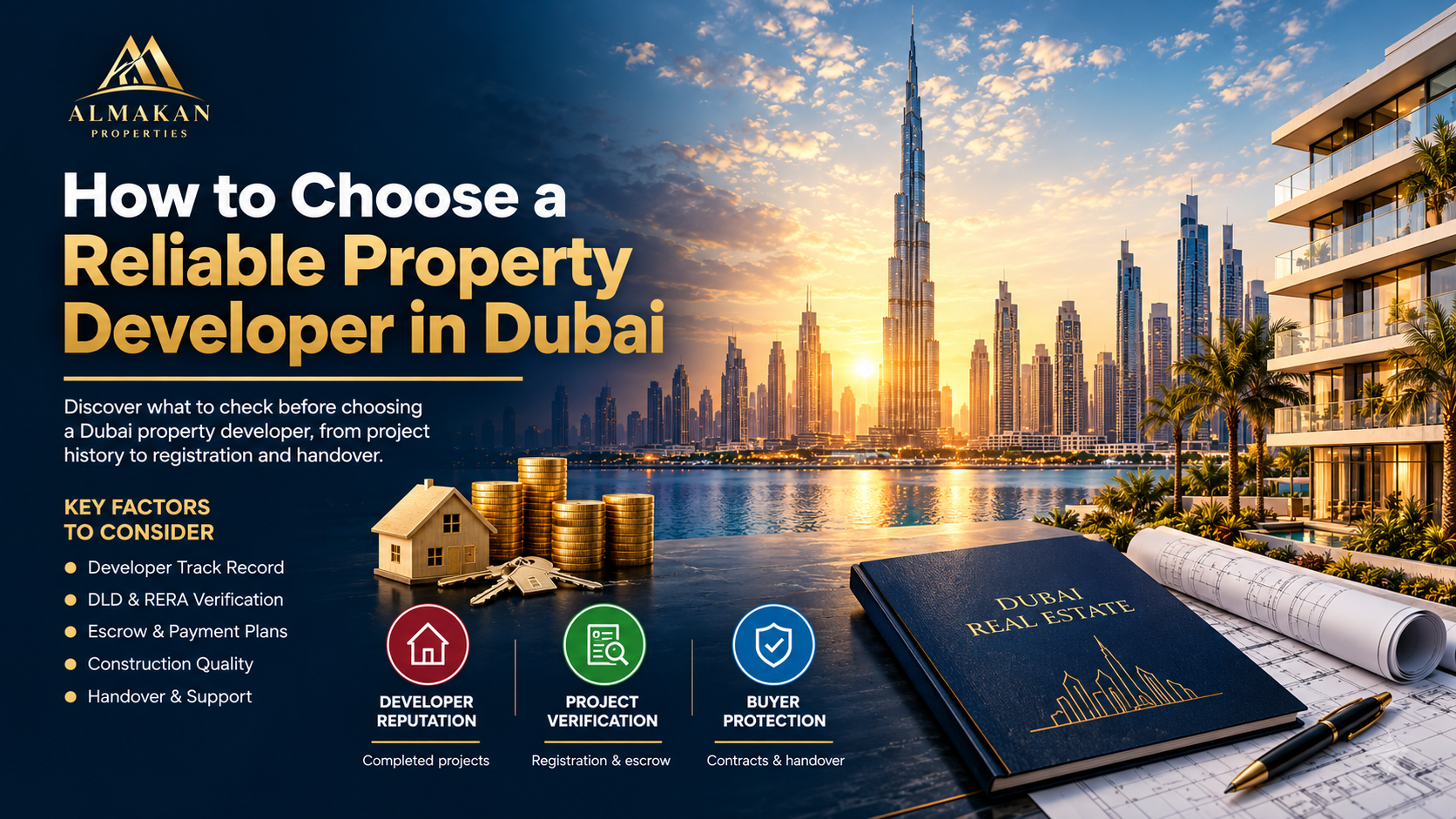
Buying property in Dubai can be an exciting opportunity for homebuyers and real estate investors. However, choosing the right property developer is just as important as selecting the right location, property type, or payment plan. A reliable developer can help you make a more informed investment decision, while insufficient research may expose you to construction delays, unexpected costs, or contractual disputes.
Whether you are planning to buy an apartment, invest in an off-plan property, or purchase a luxury villa, understanding how to evaluate property developers in Dubai is essential.
In this guide, we explain how to choose a reliable property developer in Dubai, what to check before investing, and how to make a confident real estate decision.
1. Check the Developer’s Reputation and Track Record
The first step is to research the reputation of the real estate developer. Established property developers often have a portfolio of completed projects, a recognizable market presence, and a history you can independently evaluate.
Look beyond advertisements and promotional campaigns. Investigate how the developer has performed across previous residential and commercial projects.
Consider these factors:
- Number of completed property developments.
- Quality of construction and finishing.
- History of project delivery and handover.
- Feedback from existing property owners.
- Maintenance standards in completed communities.
- Transparency in communication with buyers.
If possible, visit a completed project to assess its construction quality, shared facilities, landscaping, and overall maintenance.
A developer’s reputation should be supported by verifiable evidence rather than marketing claims alone.
2. Verify the Developer’s Registration with Dubai Authorities
Before purchasing real estate, verify that the developer and proposed project meet the applicable regulatory requirements.
Dubai’s property market is regulated by the Dubai Land Department (DLD) and the Real Estate Regulatory Agency (RERA). These authorities oversee important aspects of real estate registration and development.
You should verify:
- The developer’s registration and licensing status.
- Whether the specific property project is officially registered.
- The project’s current status and reported construction progress.
- Whether the developer and project details match the proposed purchase documents.
Use the Dubai Land Department official website to access relevant real estate services and verification information.
Remember that a registered developer is not automatically the best investment choice. Regulatory checks should be combined with research into project quality, financial commitments, and delivery history.
3. Understand Escrow Accounts for Off-Plan Properties
If you are considering an off-plan property in Dubai, checking the project’s escrow arrangements is particularly important.
An off-plan property is purchased before construction is completed. Buyers may make payments according to a developer’s agreed payment plan while the property is being built.
Dubai has a regulated escrow framework for applicable off-plan developments. Under this framework, buyer payments are deposited into a designated project escrow account, which is intended to support the development of that project and protect buyers’ interests.
Before making a payment:
- Verify the project’s registration with the relevant authorities.
- Confirm the official escrow account details.
- Ensure the payment instructions match the registered project.
- Review the sales and purchase agreement (SPA).
- Keep copies of payment receipts and contractual documents.
You can review the DLD’s information about real estate project registration.
Important: An escrow account is an important safeguard, but it does not guarantee that a project will be completed on time or generate a profit.
4. Review Previous Projects and Construction Quality
A property developer’s completed projects can reveal more about its capabilities than a brochure or showroom.
Visit previous developments where possible and examine the quality of construction, building finishes, communal facilities, parking, accessibility, and maintenance.
For residential properties, pay attention to apartment layouts, ventilation, natural light, storage space, and the usability of shared areas.
For luxury properties, assess whether the delivered finishes, amenities, and specifications match the developer’s original commitments.
You should also investigate whether previous projects experienced significant handover delays or recurring quality concerns.
When researching the best property developers in Dubai, compare actual project performance rather than relying solely on brand recognition or online rankings.
5. Compare Payment Plans and the Total Cost of Ownership
An attractive payment plan does not necessarily mean a property is affordable. Buyers should understand the full financial commitment before signing an agreement.
Dubai property developers may offer different payment structures, including construction-linked instalments and post-handover payment plans, depending on the project.
Compare the following:
- Initial booking amount and deposit requirements.
- Instalment dates and payment milestones.
- Final payment and handover conditions.
- Applicable Dubai Land Department and registration fees.
- Service charges and ongoing maintenance costs.
- Potential mortgage costs, where applicable.
- Any additional charges specified in the contract.
For example, a property with a lower booking amount may still require larger instalments later. A post-handover payment plan may also have specific conditions that affect your finances.
Calculate the total cost instead of focusing exclusively on the advertised starting price.
6. Check Project Timelines and Handover Commitments
Construction progress and handover timelines are important considerations when choosing a reliable property developer in Dubai.
If you are purchasing off-plan real estate, ask for the expected completion date, construction schedule, and contractual provisions relating to delays.
Check the project’s available status information through official channels, and compare it with the developer’s statements.
You should also clarify what happens if the project is delayed, how handover will be communicated, and which conditions apply to any contractual remedies.
Avoid relying on verbal assurances. Make sure important commitments are documented in the sales and purchase agreement.
A realistic delivery schedule and transparent communication are useful indicators when evaluating a developer, although neither can eliminate construction risk.
7. Read the Sales and Purchase Agreement Carefully
The sales and purchase agreement is one of the most important documents in a property transaction.
Before signing, carefully review the terms governing the purchase, payment obligations, property specifications, handover, and potential disputes.
Pay particular attention to:
- The developer’s legal entity and buyer details.
- The property unit, floor plan, and agreed specifications.
- The purchase price and payment schedule.
- The expected completion and handover provisions.
- Cancellation, default, and refund conditions.
- Any applicable warranties and defect-related obligations.
- The dispute resolution process.
If a clause is unclear, seek independent legal advice before committing funds. Do not assume that a sales representative’s explanation overrides the written contract.
Careful contract review can help you understand your rights, responsibilities, and potential financial exposure.
8. Evaluate the Location and Long-Term Investment Potential
Even a reputable property developer cannot guarantee that every development will deliver strong investment returns.
Evaluate the location independently by researching public transport, road access, schools, healthcare facilities, shopping destinations, employment centres, and nearby developments.
For property investors, also consider rental demand, comparable property prices, expected service charges, resale liquidity, and competing supply.
Different Dubai communities attract different types of buyers and tenants. A property suitable for long-term rental income may not be the best option for short-term resale or personal residence.
Compare several projects in the same area to determine whether the asking price, amenities, and payment plan are competitive.
The goal is to select a property that matches your financial objectives, investment horizon, and risk tolerance.
9. Assess Transparency and Customer Support
Reliable property developers should communicate clearly throughout the buying process.
Evaluate how promptly the developer answers questions, provides documentation, explains payment terms, and shares construction updates.
Ask about the process for reporting defects, arranging inspections, receiving keys, and obtaining assistance after handover.
If you can speak with existing owners, ask about their experience with communication, maintenance, and after-sales support.
Be cautious if a sales representative pressures you to make an immediate payment, avoids providing written documentation, or makes promises that are absent from the contract.
Professional customer support and transparent communication can make a significant difference to your overall property ownership experience.
Conclusion
Choosing a reliable property developer in Dubai requires more than comparing prices or selecting a well-known brand. You should verify the developer’s registration, investigate previous projects, understand escrow arrangements for off-plan purchases, compare payment plans, and review the sales and purchase agreement carefully.
Most importantly, evaluate the specific project rather than assuming that every development by a reputable company offers the same quality, value, or investment potential.
With thorough research and independent verification, you can make a more informed decision when buying a home or investing in Dubai real estate.
Looking for property opportunities in Dubai? Explore available developments, compare locations, and seek professional guidance to identify properties that align with your requirements and investment goals.