
Real Estate

Real Estate

How Much Money Do You Need to Invest in Dubai Real Estate
Real Estate

How Much Money Do You Need to Invest in Dubai Real Estate?

Dubai attracts property investors with a market that covers everything from compact apartments and off-plan residences to waterfront villas, branded residences, and commercial assets. But before choosing a property, investors need to answer a more practical question: How much money do you actually need to invest in Dubai Real Estate? There is no fixed amount that works for every investor. Your required capital depends on the property price, location, property type, payment structure, financing, transaction costs, and whether your goal is rental income, capital growth, or long-term portfolio building. A smart investment budget should therefore cover more than the advertised property price. What Is the Minimum Amount Needed for Dubai Real Estate? There is no single minimum investment amount for every property in Dubai. Property prices vary according to the community, developer, unit size, construction stage, amenities, and demand in the area. A smaller apartment can require a very different budget from a villa in a premium community or a high-value commercial property. Investors with limited upfront capital can also consider off-plan property in Dubai, where developers may divide the purchase price into scheduled installments. This changes the timing of your cash requirement, but it does not reduce the total amount you eventually pay. Before committing to a payment plan, calculate the complete purchase price and every scheduled installment. How Much Should You Budget for a Dubai Property? A useful way to structure your Dubai Real Estate budget is to consider three broad investment levels. Entry-Level Property Investment Investors entering the market with a smaller budget may focus on apartments in established or emerging residential communities. At this level, the key factors are not simply finding the lowest-priced property. Investors should examine: Expected rental demand Community development Access to transport and major roads Developer reputation Service charges Resale potential Available payment plans An affordable property in a location with weak tenant demand may not produce the result an investor expects. Purchase price should always be considered alongside the property’s income potential and ongoing costs. Mid-Range Investment A larger budget opens the door to more apartment choices, larger units, townhouses and selected villas. Investors may consider properties near employment hubs, established communities, lifestyle destinations, schools, retail centres and major transport routes. At this stage, comparing properties becomes particularly important. Two properties with similar prices can have very different rental demand, service charges and future resale prospects. High-Value Property Investment Investors with substantial capital can explore luxury villas, premium apartments, branded residences, commercial assets and high-end communities. These properties may appeal to a different tenant and buyer segment and can involve larger acquisition and ownership costs. For high-value purchases, the investment decision should be based on the complete financial structure rather than the property’s headline price. What Additional Costs Should You Include? The purchase price is only one part of the budget. A buyer should calculate the acquisition cost before deciding how much capital to commit. Dubai Land Department Fees The Dubai Land Department’s published fee schedule lists 4% of the sale contract value for registering a real property sale contract. For example, on a AED 1,000,000 property, 4% equals AED 40,000. This means a buyer should not assume that AED 1 million in available cash is enough to complete a AED 1 million purchase. Brokerage Costs If a real estate agent or brokerage is involved, the buyer may also have brokerage costs according to the agreed terms of the transaction. The exact amount should be confirmed before proceeding with the purchase. Mortgage Costs Mortgage buyers may have additional expenses related to financing, including valuation, bank processing and mortgage registration costs. These expenses need to be included when calculating the actual amount of capital required. Service Charges For apartments and properties within managed communities, annual service charges can form an important part of the ownership budget. An investor calculating rental returns should consider these costs instead of comparing properties using gross rent alone. Can You Buy Dubai Property With a Payment Plan? Yes. Payment plans are available for selected off-plan developments. Depending on the project, the schedule may include: Initial booking payment Down payment Construction-stage installments Milestone payments Handover payment Post-handover installments, where offered The exact structure depends on the developer and project. A payment plan can reduce the amount of cash required at the beginning of the transaction, but investors should check the complete payment schedule before signing. A lower initial payment does not necessarily mean a lower overall investment. How Much Do You Need for a Mortgage Purchase? Mortgage financing can reduce the amount of the property’s purchase price that must be paid from your own capital, subject to lender approval and applicable regulations. For example, CBUAE regulations provide a maximum LTV of up to 80% for expatriates buying a first home/owner-occupied property valued at AED 5 million or less, with different limits applying to higher-value, subsequent and off-plan properties. Consider a simplified AED 1 million example: Property price: AED 1,000,000 Illustrative 80% mortgage: AED 800,000 Buyer contribution: AED 200,000 4% DLD sale registration fee: AED 40,000 Other applicable costs: Additional This illustrates why buyers need to calculate both the down payment and transaction costs. Actual mortgage approval depends on the lender’s assessment, borrower profile, property valuation and applicable lending requirements. Cash Purchase or Mortgage: What Should Investors Consider? A cash buyer needs sufficient capital for the purchase price and associated costs. A mortgage buyer may require less capital toward the property price upfront but takes on financing costs and monthly repayments. The decision should therefore be based on the investor’s available liquidity, expected rental income, financing cost, investment horizon and broader portfolio strategy. Using every available dirham for the purchase can also leave an investor with little liquidity for future opportunities or unexpected property expenses. How Much Money Should You Keep as a Reserve? Your property budget should not consume your entire cash position. A separate reserve can help cover: Service charges Property maintenance Repairs Furnishing Property management Mortgage payments Vacancy periods Unexpected expenses For rental properties, this

Buy Property in Dubai
Real Estate

How to Buy Property in Dubai as a Foreigner in 2026

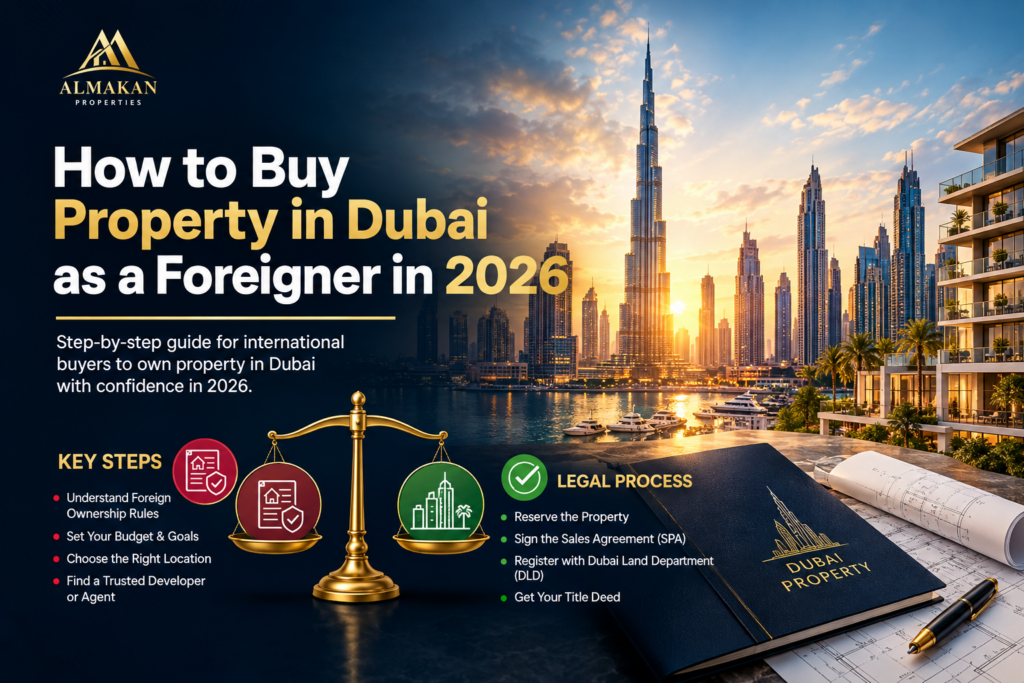
Dubai has become one of the world’s most attractive destinations for international property investors. With a strong economy, world-class infrastructure, modern communities, and a well-regulated real estate market, the city continues to attract buyers from across the globe. If you are wondering how to buy property in Dubai as a foreigner in 2026, the process is more straightforward than many international investors expect. Foreign nationals can purchase property in designated freehold areas without becoming UAE residents first. Can Foreigners Buy Property in Dubai? Yes. Foreigners can buy property in Dubai, including both UAE residents and non-residents, subject to Dubai’s property ownership regulations. Foreign investors can purchase properties in designated freehold areas, where ownership rights are available to non-UAE and non-GCC nationals. Dubai Land Department (DLD) regulations identify the areas where foreign nationals can own freehold property and other real estate rights. Depending on your objectives, you can consider apartments, villas, townhouses, branded residences, and other approved property types. One of the major advantages is that you generally do not need UAE residency to purchase eligible property. Non-resident foreign buyers may use a valid passport for certain DLD transactions. Step-by-Step Process of Buying Property 1. Decide Your Property Investment Goals Before looking at properties, determine why you want to invest. Are you buying a home, planning to generate rental income, looking for long-term capital appreciation, or purchasing an off-plan property for future gains? Your objective will influence the location, property type, budget, payment plan, and expected return on investment. 2. Set Your Budget Your budget should include more than the property’s advertised price. Consider: Property purchase price Dubai Land Department registration fees Real estate agency or brokerage fees, where applicable Mortgage-related costs, if financing Developer fees for certain transactions Service charges Insurance and maintenance costs Furnishing and property management expenses For a standard property sale registration, DLD currently lists a 2% buyer fee and 2% seller fee, along with additional title deed, map, knowledge, innovation, and service-partner charges. 3. Choose the Right Dubai Location Location is one of the most important factors when buying property in Dubai. Popular areas for international buyers include communities such as: Downtown Dubai Dubai Marina Business Bay Palm Jumeirah Dubai Hills Estate Jumeirah Village Circle (JVC) Dubai Creek Harbour Arabian Ranches The best location depends on your investment strategy. For example, investors seeking strong rental demand may prioritize established residential communities, while luxury buyers may prefer waterfront or branded developments. 4. Work With a Licensed Real Estate Professional Buying property internationally can be complicated without local expertise. A reputable real estate professional can help you compare properties, understand payment plans, verify project information, and navigate the transaction process. For international buyers, choosing a company with experience in overseas investment can make the process significantly easier. Almakan Properties provides property advisory services for international investors, including property tours, developer access, and end-to-end investment guidance. Its “Fly Before You Buy” program offers international buyers a guided Dubai property experience before making an investment decision. 5. Select a Property and Make an Offer Once you have identified a suitable property, your agent can help negotiate the price and terms. For an off-plan property, you should carefully review: Developer reputation Project location Construction progress Payment plan Expected completion date Escrow arrangements Service charges Resale potential For completed properties, conduct appropriate due diligence on ownership, outstanding obligations, property condition, and documentation. 6. Sign the Sale and Purchase Agreement After agreeing on the property and commercial terms, the buyer and seller proceed with the relevant sale documentation, commonly including a Sale and Purchase Agreement (SPA). Read the agreement carefully before signing. Pay particular attention to payment deadlines, completion dates, cancellation provisions, developer obligations, and other contractual terms. For eligible digital transactions, Dubai Land Department’s Dubai Now service provides a digital process that includes generating and signing the SPA and transferring the purchase amount and service fees through an escrow account. 7. Complete the DLD Registration The final stage is registering the property with the Dubai Land Department. Once the required payments and documentation are completed, ownership is formally registered and the title deed is issued. This registration is an essential part of the Dubai property buying process because it officially records the ownership of the property. What Documents Do Foreign Buyers Need? The exact documentation depends on the transaction, property type, and buyer’s residency status. For non-resident foreign buyers, a valid passport may be required for applicable DLD transactions. UAE residents may also need UAE identification and other transaction documents. For financed purchases, banks can require additional documents such as proof of income, bank statements, employment information, and identification documents. Always confirm the latest requirements with the relevant authority, bank, developer, or licensed property professional before proceeding. How Much Does It Cost to Buy Property in Dubai? The total cost depends on the property’s price and transaction structure. One major expense is the DLD registration fee. For a standard sale, DLD currently states a 2% buyer registration fee, with additional charges for title deed issuance, maps, and other services. You should also budget for ongoing expenses such as: Annual service charges Maintenance Property management Mortgage interest, if applicable Insurance Furnishing and fit-out costs Understanding the complete cost structure before purchasing helps you calculate your potential rental yield and overall investment return more accurately. Can Foreign Property Buyers Get a UAE Golden Visa? Property investment can also provide a pathway to UAE residency under applicable eligibility requirements. According to Dubai Land Department’s current investor Golden Visa information, a real estate investor with property valued at AED 2 million or more may qualify, subject to the applicable conditions and documentation. The Golden Visa and property ownership are separate matters, so investors should verify current eligibility requirements before relying on residency benefits as part of an investment decision. Should You Buy Off-Plan or Ready Property in Dubai? Both options have advantages. Off-plan property:  may offer attractive developer payment plans, launch pricing, and the opportunity to purchase before completion. However, investors should carefully evaluate the

real estate advisor in dubai
Real Estate

Why You Need a Real Estate Advisor in Dubai for High-Yield Investments

Why Do You Need a Real Estate Advisor in Dubai? Dubai’s property market is evolving at an unprecedented pace. Backed by the visionary leadership of Sheikh Mohammed bin Rashid Al Maktoum, the city has transformed into a global economic powerhouse and a safe haven for international capital. From high-end luxury penthouses in Downtown Dubai to fast-appreciating off-plan projects in Jumeirah Village Circle (JVC), the opportunities are massive. However, navigating this highly competitive landscape requires more than just a standard broker—it requires a strategic real estate advisor in Dubai. At Almakan Properties, guided by the strategic foresight of Shaikh Ali bin Rashed bin Ali Al Maktoum, we don’t just show you listings; we align your property portfolio with your long-term financial goals through comprehensive market intelligence. The Critical Difference: Real Estate Broker vs. Advisor Many investors mistake a real estate broker for an advisor. Understanding the difference is crucial for your investment’s success: Real Estate Broker: Focuses purely on transactional buying and selling. Their role is usually limited to finding a buyer or a seller, managing viewings, and closing the deal. Real Estate Advisor in Dubai: Provides end-to-end strategic wealth and asset management. An advisor analyzes market intelligence, tracks growth cycles, and identifies high-potential commercial and residential assets tailored to your specific budget, tax structure, and risk profile. Instead of pushing a single developer, an independent advisory firm like Almakan Properties evaluates the entire Dubai landscape to find undervalued assets that offer sustainable capital appreciation. Dubai Property Market Outlook & Advisor Recommendations To make an informed decision, a smart investor must look at community data. Here is a breakdown of prime investment zones mapped out by our analytical team: Dubai Top Communities Property Type Focus Average Rental Yield (ROI) Capital Appreciation Potential Advisor Recommendation Jumeirah Village Circle (JVC) Apartments / Off-Plan 7% – 9% Medium-High High (Best for steady rental income & expat housing) Dubai Marina & Downtown Luxury Residences 5% – 7% Very High High (Best for capital appreciation & HNI) Business Bay Commercial & Residential 6% – 8% High Medium-High (Steady growth & prime business hub) Arabian Ranches / Damac Hills Premium Villas 5% – 6.5% High High (Best for family-oriented long-term rentals) Reasons to Partner with an Real Estate Advisor in Dubai 1. Exclusive Access to Off-Plan Inventories The most lucrative deals in Dubai are often secured before they hit the public market. Through our deep-rooted network with Dubai’s top tier-1 and tier-2 developers, an Almakan real estate advisor grants you direct access to VIP allocations, inventory blocks, and exclusive flexible payment plans (such as 1% monthly structures) that are invisible to the public eye. 2. Growth Cycle Management & Market Intelligence Maximizing your Return on Investment (ROI) requires deep data. Our advisory services focus on Growth Cycle Management. We evaluate: Historic community price trends. Infrastructure expansions (like upcoming Dubai Metro blue/purple line extensions). Supply versus demand metrics in specific zones. This ensures you invest in communities that are entering a growth phase rather than buying at a market peak. 3. Navigating the Legal Landscape Dubai’s regulatory environment, governed by the Real Estate Regulatory Agency (RERA) and the Dubai Land Department (DLD), is designed to protect investors. An expert advisor ensures that: Your funds are securely deposited into verified Escrow Accounts for off-plan properties. All Sales and Purchase Agreements (SPA) are legally sound. Your property title deeds are processed correctly without hidden administrative delays. 4. Seamless Golden Visa & Corporate Tax Structuring With UAE’s business-friendly ecosystem, many international buyers invest in real estate to secure a 10-year UAE Golden Visa. A dedicated advisor handles the entire asset-evaluation loop required for the Golden Visa application, ensuring your property value meets the minimum threshold setup by immigration authorities. Furthermore, we help structure your real estate assets effectively against local corporate regulations if you are purchasing under a corporate entity. 5. Post-Acquisition Asset & Property Management An investment doesn’t end at handover. A professional real estate advisor assists in: Snagging inspections (checking for construction defects before taking ownership). Finding qualified tenants using corporate networks. Managing lease renewals, maintenance, and property listings. Want to see your potential investment live? Connect with our dedicated team and discover our exclusive Fly Before You Buy Program to experience luxury real estate scouting firsthand with an advisor taking care of your itinerary. The Smart Investor’s Dubai Property Checklist Before signing an agreement, make sure your advisor runs through this crucial checklist with you: Developer Track Record: Has the developer delivered past projects on time and up to international building standards? Escrow Account Verification: Is the project registered with the DLD, and is there an active escrow account? Service Charges Evaluation: What are the recurring maintenance fees per square foot? High service charges can eat into your net ROI. Exit Strategy Formulation: If market conditions shift, can this property be easily flipped or liquidated in the secondary market? Schedule a Private Consultation with Almakan’s Advisory Team Ready to secure your piece of the UAE’s remarkable economic story? Don’t settle for generic property listings when you can get data-backed wealth advice. Book Real Estate Advisor in Dubai Today or chat with our RERA-certified experts instantly via WhatsApp Us. Freequently Asked Questions Q1: How does a real estate advisor in Dubai help overseas investors? An advisor acts as your local proxy. At Almakan Properties, our advisors handle market research, remote off-plan booking, digital escrow transactions, legal paperwork compliance, and ongoing property management so you can earn hands-free rental income from anywhere in the world. Q2: What are the upfront costs when buying property through an advisor in Dubai? For primary market (off-plan) properties, advisory and agency services are compensated directly by developers, meaning strategic investment guidance from Almakan Properties comes at no extra cost to the buyer. For secondary market properties, a standard 2% agency fee applies. Q3: Which areas in Dubai offer the best real estate ROI right now? Currently, affordable premium hubs like Jumeirah Village Circle (JVC), Arjan, and Dubai Hills Estate offer the highest net

Off-Plan Investments
Real Estate

What Are the Risks and Benefits of Off-Plan Investments?

The real estate market offers many ways to build wealth, but one option that continues to attract investors is off-plan property investment. Whether you’re buying your first investment property or expanding your portfolio, understanding what the risks and benefits of off-plan investments are can help you make smarter financial decisions. An off-plan property is purchased before construction is completed. In many cases, buyers invest when the project is still in the planning or early construction stage. This allows investors to secure a property at today’s price while expecting its value to increase before completion. What are Off-Plan Property Investments? Buying an off-plan property means purchasing real estate before it is fully built. Instead of viewing a completed home, buyers usually make their decision based on architectural designs, floor plans, brochures, and a model apartment. This investment method has become increasingly popular in growing real estate markets because it allows buyers to enter the market at competitive prices while benefiting from future appreciation. Unlike ready properties, off-plan developments are sold in different construction phases, often with attractive payment plans designed to make purchasing more affordable. Key Benefits of Off-Plan Investments Understanding the benefits helps explain why off-plan investments continue to grow in popularity worldwide. While every market is different, several advantages remain consistent across most real estate sectors. Lower Purchase Prices One of the biggest attractions of off-plan investing is the lower entry price. Developers often introduce projects with launch prices below expected market value to generate early sales. These promotional prices can create significant savings compared to buying a completed property. Benefits include: Better affordability Lower initial investment Increased profit potential Easier market entry for first-time investors Flexible Payment Plans Another major advantage is flexible financing. Instead of paying the full purchase price immediately, buyers usually spread payments across several years. These payment plans reduce financial pressure and allow investors to better manage their cash flow. Many buyers also use this time to arrange mortgage financing before the project is completed. Strong Potential for Capital Appreciation Property values often increase as construction progresses. If the surrounding area develops with improved infrastructure, transportation, schools, shopping centers, and public facilities, property demand may rise significantly. Capital appreciation depends on several factors: Project location Economic growth Infrastructure improvements Supply and demand Developer reputation Community development Modern Design and Premium Amenities New developments usually include features that older buildings may lack. Today’s buyers expect properties to offer both comfort and convenience. Common amenities include: Smart home technology Energy-efficient systems Swimming pools Fitness centers Landscaped parks Children’s play areas Security services Co-working spaces Retail outlets Covered parking Greater Choice of Units Buying early gives investors access to the best selection. Instead of choosing from remaining inventory, buyers can often select the following: Preferred floor level Better views Corner units Larger layouts Ideal orientation Premium locations within the community Common Risks of Off-Plan Investments While the advantages are attractive, every investor should also understand the possible risks before making a purchase. Knowing these challenges doesn’t mean avoiding off-plan investments. Instead, it helps buyers prepare and make informed decisions. Construction Delays Project delays remain one of the most common concerns. Unexpected issues such as labor shortages, rising material costs, supply chain disruptions, regulatory approvals, or adverse weather conditions can affect construction schedules. Possible impacts include: Delayed rental income Longer waiting periods Financial planning adjustments Delayed occupancy Market Price Fluctuations One of the biggest risks of investing in off-plan property is market price fluctuations. Since construction can take several months or years, property values may change before completion. If market prices decline, the property’s value could be lower than the purchase price, reducing potential returns. On the other hand, if the market experiences strong growth, investors may benefit from significant capital appreciation before taking possession. Developer-Related Risks The success of an off-plan investment largely depends on the developer’s reliability and financial stability. Delays in construction, changes to the original design, poor build quality, or even project cancellation can negatively impact investors. Choosing a reputable developer with a proven track record of delivering projects on time and maintaining high construction standards is essential. Financing Challenges Securing financing for an off-plan property can sometimes be more complex than purchasing a completed property. Mortgage approval may depend on the construction stage, lender policies, or changes in the buyer’s financial circumstances before project completion. Additionally, rising interest rates can increase borrowing costs over time. Investors should carefully assess their financial situation.  How to Reduce Investment Risks? Investing in off-plan property can be highly rewarding, but reducing potential risks requires careful planning and due diligence. Research the Developer A reliable developer is more likely to deliver the project on time, maintain quality standards, and fulfill contractual commitments. Check the developer’s track record and completed projects. Read customer reviews and testimonials. Verify the developer’s financial stability. Confirm the project has all required registrations. Look for a history of on-time project delivery. Understand the Contract An off-plan property contract outlines your rights, obligations, and payment terms. Carefully reviewing every clause helps you avoid unexpected costs, delays, or legal disputes in the future. Review the payment schedule carefully. Understand cancellation and refund policies. Check project completion timelines. Look for penalty clauses for delays. Seek legal advice before signing if needed. Verify Legal Approvals Ensuring the project has all necessary legal approvals protects you from investing in unauthorized developments. Verify land ownership documents. Confirm building permits and approvals. Check registration with relevant authorities. Ensure compliance with local property laws. Request official legal documentation before investing. Who Should Consider Off-Plan Investments? Off-plan properties may be suitable for several types of buyers. First-Time Investors Lower entry prices and flexible payment plans make off-plan properties an attractive starting point for individuals entering the real estate market. Long-Term Investors Investors looking for capital growth over several years often benefit from purchasing during the early stages of development. Portfolio Diversification Experienced investors frequently add off-plan properties to diversify their real estate portfolios across different locations and project types. End Users Homebuyers

Real Estate Market Trends
Real Estate

What Are the Latest Dubai Real Estate Market Trends?

Dubai has become one of the world’s most attractive real estate destinations. Over the past few years, the city has experienced remarkable growth in residential, commercial, and luxury property markets. Whether you are a first-time buyer, an experienced investor, or someone looking for a second home, understanding the latest Dubai real estate market trends can help you make informed decisions. Dubai offers a unique combination of tax-friendly policies, world-class infrastructure, modern communities, and a growing economy. These advantages continue to attract investors from Europe, Asia, the Middle East, and beyond. At the same time, government reforms and long-term residency options have strengthened confidence in the market. Understanding Dubai’s Real Estate Market Dubai’s property market includes residential apartments, villas, townhouses, commercial offices, retail spaces, warehouses, and luxury developments. Unlike many international markets, Dubai offers freehold ownership in designated areas, allowing foreign nationals to purchase and fully own property. The market is supported by: Strong population growth Increasing tourism Expanding business opportunities Government investment in infrastructure High demand from international buyers Why Does Dubai Continue to Attract Global Investors? Dubai remains a preferred investment destination because it combines lifestyle, security, and financial opportunities. Some of the biggest advantages include the following: 1. High Rental Returns Compared to many major cities worldwide, Dubai offers attractive rental yields. Investors often enjoy better returns than they would in markets such as London, New York, or Singapore. 2. Tax Benefits Dubai has no annual property tax for most residential properties, allowing investors to keep a larger share of their rental income. 3. Stable Economy The UAE continues to diversify its economy through technology, tourism, finance, logistics, and renewable energy, reducing dependence on oil revenues. 4. World-Class Infrastructure Dubai’s modern roads, airports, metro system, healthcare facilities, schools, and entertainment attractions make it an appealing place to live and work. 5. Safe Environment Dubai consistently ranks among the safest cities globally, making it attractive to families, professionals, and retirees. Latest Dubai Real Estate Market Trends in 2026 Several important trends are influencing the market today. Strong Demand for Residential Properties Population growth and increasing numbers of skilled professionals continue to boost demand for homes. Buyers are particularly interested in: Family villas Waterfront apartments Townhouses Smart homes Gated communities Growth of Off-Plan Projects Off-plan properties remain one of the strongest trends. Many investors choose off-plan developments because they offer: Lower initial investment Flexible installment plans Potential capital appreciation Brand-new modern designs Attractive developer incentives Luxury Property Market Continues to Expand Dubai has become a global hub for luxury real estate. High-net-worth individuals are purchasing: Beachfront villas Branded residences Waterfront penthouses Golf community homes Ultra-luxury mansions Rental Market Remains Strong Rental demand has increased because of: Population growth Corporate relocation Digital nomads Expanding business sectors Tourism Factors Driving Dubai’s Property Market Growth Dubai’s real estate market continues to perform well because several economic, social, and government-related factors work together. Understanding these drivers can help investors identify long-term opportunities rather than focusing only on short-term price movements. 1. Population Growth Dubai’s population continues to grow as professionals, entrepreneurs, and skilled workers move to the city for career opportunities and a high quality of life. As more people settle in Dubai, the demand for housing naturally increases. This creates opportunities for both property sales and rental investments. The growing population also encourages developers to build new communities with schools, healthcare facilities, parks, shopping centers, and public transport. 2. Strong Tourism Industry Dubai welcomes millions of visitors every year. Tourism supports hotels, serviced apartments, holiday homes, restaurants, retail businesses, and entertainment venues. Many investors purchase apartments specifically for short-term rentals, especially in tourist-friendly locations. Short-term rental demand can provide attractive returns when properties are managed effectively. 3. Business-Friendly Environment Dubai has established itself as a leading international business hub. Companies from around the world continue to open regional headquarters. As businesses grow, employees require residential properties close to commercial districts, increasing demand across multiple communities. 4. Infrastructure Development One reason Dubai’s property market continues to attract investors is its commitment to infrastructure development. Major investments include: Metro expansion New highways Smart city projects Parks and recreational facilities Healthcare centers International schools Shopping destinations Government Initiatives Supporting Real Estate Investment Government policies have played an important role in strengthening investor confidence. 1. Long-Term Residency Programs The introduction of long-term residency options has encouraged many professionals, entrepreneurs, and investors to make Dubai their permanent home. These initiatives provide greater stability and encourage long-term property ownership rather than short-term speculation. 2. Foreign Ownership Opportunities Foreign buyers can own property in designated freehold areas, giving international investors confidence when purchasing real estate. This has significantly expanded Dubai’s global buyer base over the past decade. 3. Transparent Property Regulations Dubai has developed a well-regulated property market with clear legal processes. Buyers benefit from: Property registration systems Escrow account regulations Licensed developers Professional brokerage standards These measures help improve transparency and reduce investment risks. 4. Commercial Real Estate Trends Residential properties receive much attention, but Dubai’s commercial real estate sector is also experiencing positive growth. Businesses continue expanding, increasing demand for the following: Office spaces Retail shops Warehouses Logistics facilities Industrial units Co-working spaces Flexible office solutions are becoming increasingly popular among startups and international companies establishing operations in Dubai. 5. Warehouse and Industrial Growth The growth of e-commerce has increased demand for logistics and warehouse facilities. Businesses require modern storage spaces with excellent connectivity to ports, airports, and highways. Industrial areas continue benefiting from Dubai’s position as a global trade and logistics hub. How Is Technology Transforming Dubai Real Estate? Technology has changed how buyers search for, evaluate, and purchase property. Today’s market offers greater convenience than ever before. 1. Smart Homes Modern developments now include features such as the following: Smart lighting Digital security systems Remote climate control Energy-efficient appliances Automated parking systems 2. Virtual Property Tours International investors can now explore properties without traveling to Dubai. Virtual tours allow buyers to View layouts Compare finishes Understand community features Save time before making decisions 3. Digital

invest in dubai real estate
Real Estate

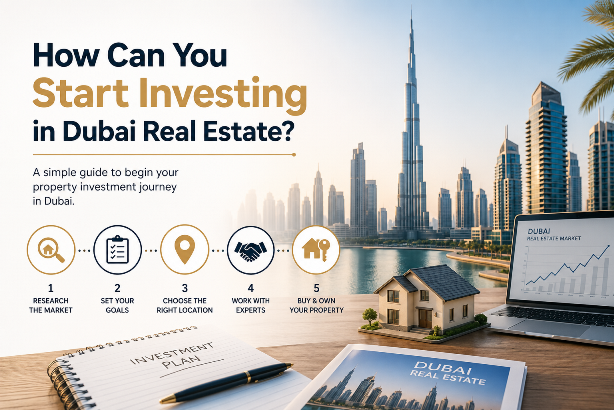
How Can You Start Investing in Dubai Real Estate?

Dubai has become one of the world’s most attractive destinations for property investment. Every year, thousands of investors choose Dubai because of its growing economy, modern infrastructure, tax-friendly environment, and strong rental demand. Whether you’re buying your first apartment or planning to build a long-term property portfolio, understanding the right approach can help you make smarter investment decisions. Starting your journey in Dubai real estate doesn’t have to be difficult. With proper planning, market research, and professional guidance, you can find opportunities that match your financial goals while reducing investment risks. Why To Invest In Dubai Real Estate? Dubai has transformed into a global business and lifestyle destination. Its strategic location connects Europe, Asia, and Africa, making it an attractive city for professionals, entrepreneurs, and international investors. Government initiatives, including long-term residency programs and investor-friendly regulations, have also increased confidence in the real estate sector. Unlike many international markets, Dubai continues to offer competitive property prices while delivering attractive rental yields. Understanding the Dubai Real Estate Market Before investing, it’s important to understand how the market works. Dubai offers various property options, including: Apartments Villas Townhouses Commercial offices Retail spaces Hotel apartments Off-plan developments Ready-to-move properties Market conditions can change depending on supply, demand, infrastructure projects, and economic growth. Investors who regularly monitor these trends are often better positioned to make informed decisions. Benefits of Invest in Dubai Real Estate Many investors prefer Dubai because it offers advantages that are difficult to find in other global property markets. High Rental Returns Dubai is known for delivering attractive rental yields compared to many major cities around the world. Well-located properties often generate consistent rental income throughout the year. Tax Advantages One of the biggest attractions is the tax-friendly environment. Investors can benefit from favorable tax policies, helping improve overall returns. Strong Capital Appreciation As Dubai continues to expand with new developments, transportation projects, and business districts, many properties increase in value over time. Diverse Investment Opportunities Whether your budget is modest or substantial, Dubai offers investment opportunities across different price ranges. Global Investor Confidence Investors from around the world continue to choose Dubai because of its transparent regulations and stable investment environment. 10 Proven Steps for First-Time Investors Step 1: Define Your Investment Goals Every successful investment begins with a clear objective. For example, someone seeking rental income may prioritize apartments in established communities, while an investor focused on appreciation might consider emerging neighborhoods with planned infrastructure improvements. Having defined goals also makes it easier to compare opportunities objectively rather than make decisions based solely on emotion. Step 2: Set Your Budget Carefully One of the most common mistakes first-time investors make is focusing only on the purchase price. Creating a complete financial plan helps prevent unexpected expenses after purchasing the property. It is also wise to keep an emergency reserve for maintenance, temporary vacancies, or market fluctuations. A realistic budget gives you confidence throughout the buying process and reduces financial stress in the future. Step 3: Research the Best Investment Areas Location remains one of the most important factors in real estate investment. When comparing locations, consider factors such as rental demand, average occupancy, future development plans, and resale potential. Instead of choosing solely based on price, evaluate the long-term value each community can offer. A slightly higher investment in a well-connected area may generate higher rental income and better capital growth over time. In addition, review historical price trends and understand the type of tenants or buyers the area attracts. This research will help you make a more informed investment decision. Step 4: Understand Property Ownership Rules in Dubai Before purchasing a property, it’s important to understand Dubai’s property ownership regulations. The government has established a transparent legal framework that protects both local and international investors. Foreign nationals can purchase property in designated freehold areas, where they enjoy full ownership rights. These areas are popular among investors because they allow buying, selling, leasing, and inheriting property. Step 5: Choose the Right Property Not every property is a good investment. Choosing the right one requires balancing your budget, goals, and market demand. When comparing properties, consider property condition, rental potential, developer reputation, community amenities, and future growth. Before making a final decision, ask the seller or agent some questions that provide a clearer picture of the property’s true investment value. Step 6: Work with a Trusted Real Estate Company A knowledgeable real estate professional can simplify the buying process and help you avoid costly mistakes. A reliable agency can assist with: Property selection Market analysis Price negotiations Legal documentation Mortgage guidance Investment advice After-sales support Avoid working with agencies that pressure you into making quick decisions. A trustworthy advisor will explain both the advantages and potential risks of every investment opportunity. Step 7: Explore Your Financing Options Not every investor purchases property with cash. Many buyers choose financing to manage their investments more effectively. Step 8: Complete the Buying Process Buying property involves several important steps, including a property reservation, sales agreement, financing approval, and property transfer. Keeping copies of every agreement and receipt is recommended for future reference. Step 9: Manage Your Investment Successfully Buying a property is only the beginning. Proper management helps protect your investment and maximize returns.  Step 10: Grow Your Property Portfolio Once your first investment performs well, you may consider expanding your portfolio. Strategies include the following: reinvest rental income and diversify property types, invest in different communities, and review performance annually. Common Mistakes to Avoid Even experienced investors can make mistakes. Being aware of common pitfalls can save time and money. Buying Without Research Never purchase a property based solely on advertisements or promotional offers. Ignoring Additional Costs Registration fees, maintenance charges, and service costs should always be included in your budget. Choosing the Wrong Location A lower purchase price does not always mean better value. Demand, infrastructure, and future development matter. Expecting Instant Profits Real estate is generally a long-term investment. Patience often leads to stronger returns. Not Seeking Professional Advice

Scroll to Top